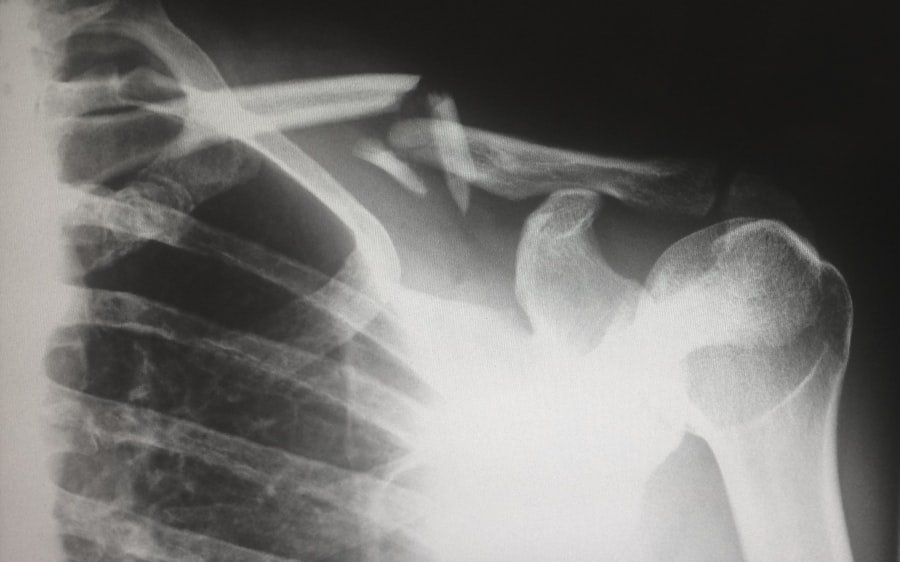
A four-year professional degree preparing competent, patient-centred medical imaging technologists across radiography, CT, MRI, ultrasound, mammography, nuclear medicine and interventional imaging — with strong clinical training and research.
To become a nationally respected and internationally aware centre of excellence in medical imaging education, recognised for academic quality, safe clinical practice, research, innovation and service to society. The Department seeks to develop ethical, technologically confident and patient-centred professionals who can produce high-quality diagnostic images, protect patients and staff from avoidable risk, and support equitable access to modern imaging services.
The Department of Medical Imaging Technology at KIAS is committed to delivering an outcome-based, practice-oriented programme that integrates biomedical sciences, imaging physics, modality-specific knowledge, supervised clinical education and research. Through qualified faculty, simulation and skills laboratories, hospital rotations, case-based learning and collaboration with healthcare and technology partners, the programme cultivates clinical judgement, image-quality awareness, radiation protection, ethical decision-making, teamwork and responsible use of health information.
The BS Medical Imaging Technology programme at KIAS is a four-year professional undergraduate degree intended to prepare competent allied-health practitioners for contemporary diagnostic imaging environments. It combines biomedical knowledge, medical radiation science, patient care, imaging procedures, digital technologies, quality assurance, supervised clinical practice and research. Students progress from foundational sciences to increasingly complex imaging modalities and clinical responsibilities, enabling them to support radiologists and other healthcare professionals in the detection, assessment and monitoring of disease and injury.
The curriculum is structured around classroom instruction, laboratory practice, simulation, clinical case learning, hospital rotations and a final-year research project. Emphasis is placed on safe equipment operation, accurate patient positioning, selection of appropriate imaging parameters, image-quality evaluation, radiation protection, infection prevention, communication, documentation and the ethical handling of patient information — while introducing PACS/RIS, digital image processing, quality management and artificial intelligence.
Healthcare systems increasingly depend on imaging for early diagnosis, trauma assessment, cancer and cardiac care, surgical planning and treatment monitoring. Pakistan requires professionals who can operate modern imaging systems safely, reduce repeat examinations, support quality assurance and extend reliable diagnostic services to both urban and underserved communities. A structured BS MIT programme addresses this need by combining scientific education with sustained clinical exposure and professional accountability.
The programme is expected to strengthen diagnostic services by preparing graduates who can produce clinically useful images, protect patients from unnecessary exposure, support efficient departmental workflows and contribute to multidisciplinary care. At institutional and societal levels, graduates can assist with screening, emergency imaging, quality-improvement projects, clinical research, health education and the responsible adoption of new imaging technologies.
With clinical experience, recognised certification and postgraduate education, graduates may progress towards modality specialisation, supervisory responsibilities, quality assurance, radiation safety, clinical education, research or department management. Employment outside Pakistan remains subject to the destination country's credential assessment, professional registration, language, examination and supervised-practice requirements.
Eligibility: Candidates must have completed HSSC / F.Sc. (Pre-Medical) or an equivalent qualification recognised by IBCC with a minimum of 50% marks and at least 12 years of education, having studied Physics, Chemistry and Biology at the intermediate level. A-Level or foreign-qualification holders must provide an equivalence certificate. Admission is granted on university merit and may include an entry test and/or interview as prescribed by the institution.
BS Medical Imaging Technology — Four-Year Course, 8 semesters, 130 total credit hours.
| Sr# | Course Code | Title of the Course | Cr. Hrs. | Pre-Requisite |
|---|---|---|---|---|
| 1 | ENGL-1101 | Functional English | 3 | |
| 2 | ANAT-1101 | Human Anatomy-I | 3 | |
| 3 | PHYS-1101 | Human Physiology-I | 3 | |
| 4 | BIOC-1101 | Biochemistry | 3 | |
| 5 | MIT-1101 | Introduction to Medical Imaging Technology | 3 | |
| 6 | ISLS-1112 | Islamic Studies / Ethics | 2 | |
| Total Credit Hours | 17 |
| Sr# | Course Code | Title of the Course | Cr. Hrs. | Pre-Requisite |
|---|---|---|---|---|
| 1 | ENGL-1102 | Communication and Expository Writing | 3 | ENGL-1101 |
| 2 | ANAT-1102 | Human Anatomy-II and Cross-Sectional Anatomy-I | 3 | ANAT-1101 |
| 3 | PHYS-1102 | Human Physiology-II | 3 | PHYS-1101 |
| 4 | PATH-1101 | General Pathology | 3 | |
| 5 | MIP-1101 | Medical Radiological Physics and Radiation Science | 3 | |
| 6 | PAKS-1113 | Pakistan Studies / Constitution | 2 | |
| Total Credit Hours | 17 |
| Sr# | Course Code | Title of the Course | Cr. Hrs. | Pre-Requisite |
|---|---|---|---|---|
| 1 | RAN-2101 | Radiographic Anatomy and Positioning-I | 3 | ANAT-1102 |
| 2 | RGP-2101 | General Radiography and Imaging Procedures-I | 3 | MIT-1101 |
| 3 | MIE-2101 | Imaging Equipment and Instrumentation | 3 | MIP-1101 |
| 4 | RBP-2101 | Radiation Biology and Protection | 3 | MIP-1101 |
| 5 | PHRM-2101 | Pharmacology and Contrast Media | 2 | BIOC-1101 |
| 6 | INFT-2101 | ICT and Imaging Informatics | 2 | |
| Total Credit Hours | 16 |
| Sr# | Course Code | Title of the Course | Cr. Hrs. | Pre-Requisite |
|---|---|---|---|---|
| 1 | RAN-2102 | Radiographic Anatomy and Positioning-II | 3 | RAN-2101 |
| 2 | RGP-2102 | General Radiography and Imaging Procedures-II | 3 | RGP-2101 |
| 3 | CDR-2101 | Computed and Digital Radiography | 3 | MIE-2101 |
| 4 | PCM-2101 | Patient Care, Infection Prevention and Emergency Procedures | 3 | |
| 5 | BIOI-2101 | Biostatistics | 2 | |
| 6 | RESM-2101 | Research Methodology | 2 | BIOI-2101 |
| Total Credit Hours | 16 |
| Sr# | Course Code | Title of the Course | Cr. Hrs. | Pre-Requisite |
|---|---|---|---|---|
| 1 | CT-3101 | Computed Tomography | 3 | CDR-2101 |
| 2 | MRI-3101 | Magnetic Resonance Imaging-I | 3 | ANAT-1102 |
| 3 | USG-3101 | Diagnostic Ultrasound-I | 3 | ANAT-1102 |
| 4 | MAM-3101 | Mammography and Special Radiological Procedures | 3 | RGP-2102 |
| 5 | CMS-3101 | Clinical Medicine and Surgery for Imaging | 2 | PATH-1101 |
| 6 | CPR-3101 | Clinical Practicum-I | 2 | RGP-2102 |
| Total Credit Hours | 16 |
| Sr# | Course Code | Title of the Course | Cr. Hrs. | Pre-Requisite |
|---|---|---|---|---|
| 1 | MRI-3102 | Magnetic Resonance Imaging-II | 3 | MRI-3101 |
| 2 | USG-3102 | Diagnostic Ultrasound-II and Doppler | 3 | USG-3101 |
| 3 | FAC-3101 | Fluoroscopy, Angiography and Cardiac Imaging | 3 | RGP-2102 |
| 4 | NMD-3101 | Nuclear Medicine and Theranostics | 3 | RBP-2101 |
| 5 | IR-3101 | Interventional Radiology | 2 | FAC-3101 |
| 6 | CPR-3102 | Clinical Practicum-II | 2 | CPR-3101 |
| Total Credit Hours | 16 |
| Sr# | Course Code | Title of the Course | Cr. Hrs. | Pre-Requisite |
|---|---|---|---|---|
| 1 | AMI-4101 | Advanced Imaging Technology and Artificial Intelligence | 3 | CT-3101 / MRI-3101 |
| 2 | PACS-4101 | PACS/RIS and Digital Image Processing | 3 | INFT-2101 |
| 3 | QAS-4101 | Quality Assurance and Equipment Safety | 2 | MIE-2101 |
| 4 | RAM-4101 | Radiology Department Management and Entrepreneurship | 2 | |
| 5 | CPR-4101 | Clinical Practicum-III | 3 | CPR-3102 |
| 6 | FYP-4101 | Final Year Project-I | 3 | RESM-2101 |
| Total Credit Hours | 16 |
| Sr# | Course Code | Title of the Course | Cr. Hrs. | Pre-Requisite |
|---|---|---|---|---|
| 1 | INT-4101 | Clinical Practicum-IV / Internship | 6 | CPR-4101 |
| 2 | FYP-4102 | Final Year Project-II | 3 | FYP-4101 |
| 3 | PPE-4101 | Professional Practice, Ethics and Health Law | 2 | |
| 4 | CIP-4101 | Community Imaging and Public Health | 2 | |
| 5 | MIT-4102 | Professional Elective: Advanced Sonography / Echocardiography / Radiation Safety | 3 | Departmental approval |
| Total Credit Hours | 16 |
| Program Total Credit Hours | 130 |
Graduates of the BS Medical Imaging Technology programme will be able to: